
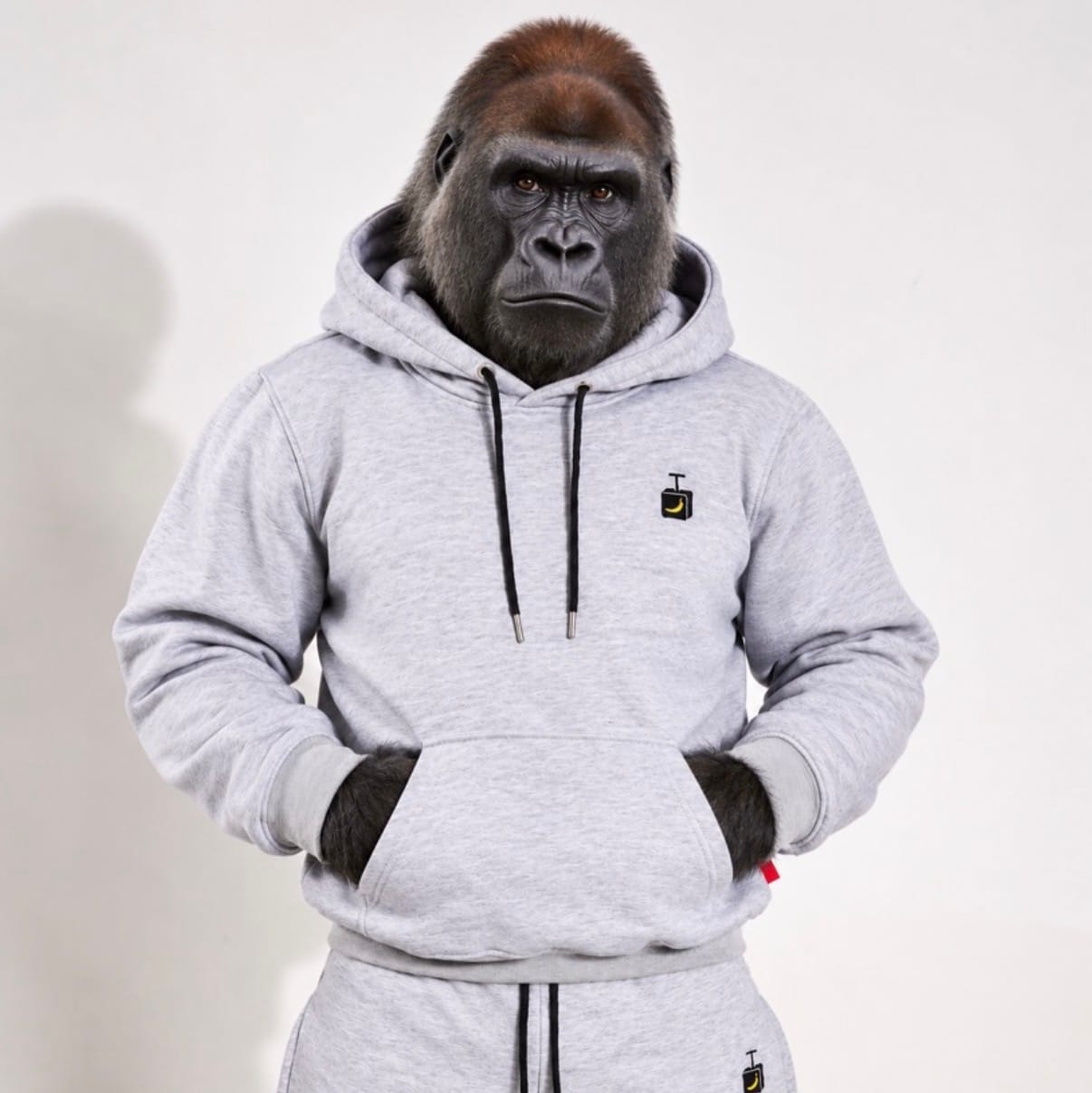
There’s a version of this post where we tell you our hoodies are built differently, rattle off some impressive-sounding numbers, and move on. We’re not doing that.
The honest version is this: Represent has set a high bar in heavyweight streetwear. Their Owners Club hoodies run at 480gsm to 550gsm, their prints hold up wash after wash, and their construction has earned a reputation that independent labels have to reckon with. We reckon with it openly.
Here’s what we know, what we’re doing about it, and what you should demand from any hoodie worth your money.
What “Heavyweight” Actually Means
GSM (grams per square metre) is the measurement that separates a hoodie that lasts three winters from one that pills after three washes. Most high-street hoodies sit around 280gsm to 320gsm. That’s why they feel thin by January.
Premium streetwear starts at 400gsm. Represent’s Owners Club line pushes to 500gsm-plus, which is why the fabric has that dense, structured drop when you pull it on. It doesn’t flap. It doesn’t bag out at the pocket. It holds its shape.
What to look for when you’re buying
- 400gsm minimum for a hoodie that genuinely qualifies as heavyweight
- 100% ring-spun cotton or a high-cotton blend for softness that doesn’t compromise structure
- Reinforced rib cuffs and hem that return to shape after stretching
- Double-stitched seams throughout, not just at the shoulders
We’re being straight with you: we’re building towards that standard. Our current hoodies are constructed with quality in mind, but we know the GSM conversation is one we need to win on paper, not just in feel. That’s a commitment we’re making publicly, here.
Screen Printing: Why Most Prints Die in the Wash
The print is the whole point. It’s the reason someone picks up a Simian Saboteur piece over a plain hoodie from anywhere else. So when a print starts cracking after five washes, it’s not just a quality failure. It’s a betrayal of the thing that made the garment worth buying.
Most budget screen printing uses a single pass of standard plastisol ink. It looks fine on day one. By wash ten, it’s flaking at the edges.
What high-quality screen printing actually involves
High-density printing builds the design up in layers, creating a raised, tactile surface that bonds more deeply with the fabric. The ink isn’t sitting on top of the weave. It’s integrated into it. That’s the difference between a print that lasts and one that peels.
The key variables are:
- Ink type: plastisol holds colour well but can crack; water-based inks cure deeper into the fabric for longer life
- Cure temperature and dwell time: under-cured prints fail fast, regardless of ink quality
- Number of passes: single-pass printing is cheaper; multi-pass builds durability
- Fabric pre-treatment: discharge printing removes the dye from the fabric before applying ink, giving sharper results on dark garments
This is the area we’re investing in most directly. Our graphics are the product. The print process has to match that ambition.
How to Wash-Test a Hoodie Before You Trust It
You shouldn’t have to think about this. A hoodie that costs serious money should survive serious use. But since most brands don’t publish their wash protocols, here’s what to run on any hoodie you’re considering keeping long-term.
The 30-wash test
The industry standard for garment durability is a 30-wash cycle at 30°C. If a print holds colour and integrity through 30 washes at that temperature, it’s built to last. If it starts cracking at wash five, it was never built to last. It was built to look good in the product photo.
Run your own version at home:
- Wash inside-out at 30°C from the first wash onwards
- No tumble drying for the first ten washes; air dry flat to preserve shape
- Check the print edges after wash five, ten, and twenty for any lifting or cracking
- Check the cuffs and hem for elasticity loss after wash fifteen
- Check seams at the underarm and shoulder for any thread pull
The honest benchmark: if a hoodie can’t pass a 30-wash test without visible degradation, it doesn’t belong at a premium price point. Full stop.
We’re applying this standard to every future production run. Not as a marketing exercise. As a baseline requirement before anything leaves the factory.
Where We Stand, and Where We’re Going
Represent built their reputation over years of obsessive product development. We respect that. We’re not here to pretend we’ve already matched it.
What we are here to say is that we know exactly where the gap is, we’re not hiding from it, and we’re closing it with every production run. The independent label advantage is this: when we decide to raise the standard, we don’t need a board meeting. We just do it.
What you can expect from Simian Saboteur going forward:
- Fabric weights published on every product page, no vagueness
- Print process details for every graphic, including ink type and technique
- Wash care guidance that actually reflects how the garment was tested, not just a generic label
If you’ve got a piece from us already, we want to hear how it’s holding up. Tag us, message us, tell us the truth. That feedback is how we get better faster than a brand ten times our size.
The next hoodie drop is built differently. Watch this space.